Platform comparison
| Platform | YES odds | NO odds | Fee | KYC | Settlement | |
|---|---|---|---|---|---|---|
Polymarket (via Kalshi Alternative UK) Pick polygram.ink (preferred broker) |
99% | 1% | 0% (USDC on-chain) | No-KYC up to $1,500 | USDC, auto via UMA oracle | Trade this market → |
Polymarket (direct) polymarket.com |
99% | 1% | 0% | Geo-blocked in US/UK/EU | USDC, on-chain | Trade this market → |
Kalshi kalshi.com |
— | — | Up to 7% per trade | US-only, KYC required | USD | Trade this market → |
Betfair Exchange betfair.com |
— | — | 2-5% commission | Full KYC from first trade | GBP / EUR | Trade this market → |
Manifold Markets manifold.markets |
— | — | Play-money (mana) | None — play-money | Mana (no cash-out) | Trade this market → |
Outcome probabilities
Current market-implied probability for each outcome, from the live order book.
| Outcome | Probability |
|---|---|
| 28°C | 99% |
| 20°C or below | 0% |
| 21°C | 0% |
| 26°C | 0% |
| 27°C | 0% |
| 22°C | 0% |
| 23°C | 0% |
| 24°C | 0% |
| 25°C | 0% |
| 29°C | 0% |
| 30°C or higher | 0% |
Market context
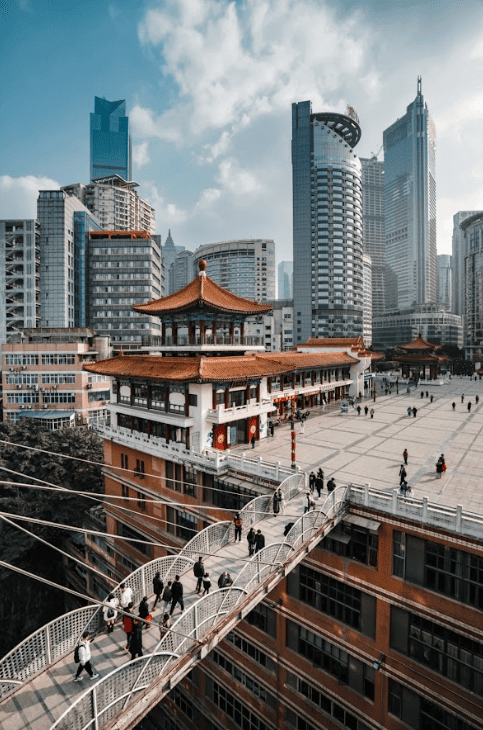
Chongqing faces its peak summer heat on 2 July 2026, with the city famously dubbed one of China’s “Four Furnaces” where temperatures routinely exceed 35°C and humidity amplifies the discomfort[3]. The market in question bets on whether the highest temperature at Chongqing Jiangbei International Airport will fall within a specific range, yet the crowd-implied probability of a “YES” outcome sits at 0%, suggesting traders expect the threshold to be missed entirely[6]. This stark divergence from climate records—where July averages hover near 33°C and peaks can reach 43°C—raises questions about how different platforms interpret the same data[1][4].
Historically, Chongqing’s July temperatures have consistently breached 35°C, with some years recording highs as extreme as 43°C, making a 0% probability for a moderate range appear counterintuitive against long-term weather patterns[3][5]. Platforms like Polymarket, which use decimal odds, may price this differently than Kalshi or Betfair, which rely on implied probability and often embed higher fees or stricter KYC requirements, leading to divergent valuations on identical weather events[6]. Traders should note that while Smarkets offers lower fees, its liquidity may not match the depth found on larger exchanges, affecting how quickly probabilities shift as new data emerges.
Traders must monitor afternoon thunderstorm schedules, as July is Chongqing’s wettest month with frequent showers that can temporarily suppress peak temperatures[2]. Recent reports from Travel China Guide highlight that urban heat island effects and high humidity can push perceived temperatures to 43°C, even if actual readings fluctuate[5]. A sudden rain event or cloud cover could alter the day’s maximum, making real-time Wunderground updates critical for adjusting positions before the settlement window closes on 2 July at 12:00 UTC.
Methodology
We read Highest temperature in Chongqing on July 2? from four platform perspectives: Polymarket (on-chain CLOB), Kalshi (CFTC-regulated exchange), Betfair Exchange (sports book exchange), Smarkets (peer-to-peer betting exchange). Polymarket's live mid is the canonical probability; the side-by-side columns benchmark fees, KYC, settlement currency and deposit rails so you can choose the venue that fits your jurisdiction and trade size.
Resolution & payout
Polymarket settles via UMA Optimistic Oracle on Polygon. A proposer posts the outcome with a bond, the two-hour window runs, then the smart contract pays USDC.
Kalshi settles USD through the CFTC-regulated clearinghouse — the cleanest variant, with heavier KYC. Betfair Exchange settles in account currency (GBP/EUR), net of 2-5% commission. Smarkets follows the same model as Betfair with a lower default 2% commission.
FAQ
- Polymarket vs Kalshi — which is better?
- Depends on your location. Kalshi is CFTC-regulated, US-only with full KYC. Polymarket is global, on-chain, no KYC up to $1,500. Polymarket has ~10x higher liquidity but higher regulatory risk.
- What does Polymarket cost vs Kalshi?
- Polymarket: 0% fees, only Polygon network costs (~$0.01/trade). Kalshi: up to 7% per trade plus spread. For high-frequency traders, Polymarket is dramatically cheaper.
- Which platform has the deepest liquidity?
- Polymarket — by a wide margin. Top markets reach $50-500M volume, Kalshi ~$200M cumulative, Betfair similar. Deeper liquidity means your trade moves the quote less.
- What about Smarkets as an alternative?
- Smarkets is a UK betting exchange with a lower default commission (2%) than Betfair. Liquidity on political markets is below Polymarket, comparable to Kalshi. Geo-blocked in many jurisdictions.
- Which platform is accessible globally?
- Polymarket is geo-blocked in the US/UK/EU. Kalshi is US-only. Betfair and Smarkets are UK-restricted. Kalshi Alternative UK has a different geo footprint and routes to Polymarket's order book at 0% fees.
%22%2F%3E%3Cpath%20d%3D%22M%206%2066%20A%2026%2026%200%200%201%2058%2066%22%20fill%3D%22%23E6B98D%22%20opacity%3D%220.9%22%2F%3E%3Ccircle%20cx%3D%2232%22%20cy%3D%2226%22%20r%3D%2222%22%20fill%3D%22%23F5CBA7%22%2F%3E%3Cpolygon%20points%3D%2216%2C18%2020%2C4%2024%2C18%22%20fill%3D%22%2314b8a6%22%2F%3E%3Cpolygon%20points%3D%2224%2C18%2028%2C3%2032%2C18%22%20fill%3D%22%2314b8a6%22%2F%3E%3Cpolygon%20points%3D%2232%2C18%2036%2C3%2040%2C18%22%20fill%3D%22%2314b8a6%22%2F%3E%3Cpolygon%20points%3D%2240%2C18%2044%2C4%2048%2C18%22%20fill%3D%22%2314b8a6%22%2F%3E%3C%2Fsvg%3E) and
and%22%2F%3E%3Cpath%20d%3D%22M%206%2066%20A%2026%2026%200%200%201%2058%2066%22%20fill%3D%22%23E6B98D%22%20opacity%3D%220.9%22%2F%3E%3Ccircle%20cx%3D%2232%22%20cy%3D%2226%22%20r%3D%2222%22%20fill%3D%22%23F5CBA7%22%2F%3E%3Crect%20x%3D%2214%22%20y%3D%224%22%20width%3D%2236%22%20height%3D%228%22%20rx%3D%224%22%20fill%3D%22%2314b8a6%22%2F%3E%3C%2Fsvg%3E)
Trade Highest temperature in Chongqing on July 2? on Kalshi Alternative UK
Live order book, 0% fees, USDC settlement in seconds.
Open live market →