Platform comparison
| Platform | YES odds | NO odds | Fee | KYC | Settlement | |
|---|---|---|---|---|---|---|
Polymarket (via Kalshi Alternative UK) Pick polygram.ink (preferred broker) |
68% | 32% | 0% (USDC on-chain) | No-KYC up to $1,500 | USDC, auto via UMA oracle | Trade this market → |
Polymarket (direct) polymarket.com |
68% | 32% | 0% | Geo-blocked in US/UK/EU | USDC, on-chain | Trade this market → |
Kalshi kalshi.com |
— | — | Up to 7% per trade | US-only, KYC required | USD | Trade this market → |
Betfair Exchange betfair.com |
— | — | 2-5% commission | Full KYC from first trade | GBP / EUR | Trade this market → |
Manifold Markets manifold.markets |
— | — | Play-money (mana) | None — play-money | Mana (no cash-out) | Trade this market → |
Outcome probabilities
Current market-implied probability for each outcome, from the live order book.
| Outcome | Probability |
|---|---|
| 36°C | 68% |
| 35°C | 36% |
| 37°C or higher | 5% |
| 27°C or below | 0% |
| 28°C | 0% |
| 29°C | 0% |
| 30°C | 0% |
| 31°C | 0% |
| 32°C | 0% |
| 33°C | 0% |
| 34°C | 0% |
Market context
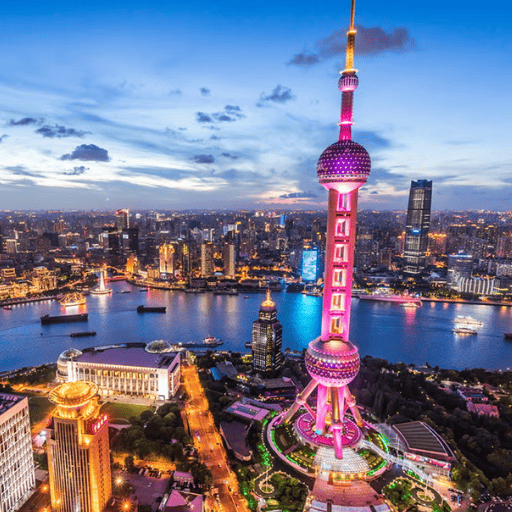
Shanghai’s July climate is defined by intense heat and humidity, with daytime highs routinely exceeding 30°C and often surpassing 35°C, making the current 0% implied probability for a specific temperature range on 6 July 2026 appear counterintuitive given seasonal norms[6][7]. Historical records show early July highs averaging 26–31°C, yet extreme outliers are common; for instance, 3 July 2025 hit 38°C under a subtropical ridge, illustrating the volatility that underpins weather markets[10]. This divergence frames how traders should interpret the 0% probability: it likely reflects a narrow resolution band rather than a belief that no heat will occur, a nuance often clearer on Polymarket’s decimal odds than on Kalshi’s implied probability model[1].
Traders must monitor the arrival of the subtropical high-pressure system, which typically peaks in mid-July and drives temperatures above 35°C, alongside any sudden shifts in monsoon rainfall that could suppress highs[6]. Recent forecasts for Shanghai Pudong International Airport indicate July highs ranging from 80°F to 93°F (27°C–34°C), with some days reaching 98°F (37°C) in the Pudong New District, suggesting the resolution source on Wunderground could capture a spike if the ridge intensifies[5][8]. Platform mechanics further influence strategy: Polymarket offers 0% fees with no-KYC trading up to $1,500 via brokers like Kalshi Alternative UK, whereas Kalshi imposes up to 7% fees and requires full KYC for US-only users, creating a cost and access divergence that affects liquidity depth on this specific weather event[1]. Betfair’s 2–5% commission and mandatory KYC from the first trade further distinguish it from Polymarket’s wallet-based, pseudonymous model, impacting how traders allocate capital across these competing venues[1].
Methodology
We read Highest temperature in Shanghai on July 6? from four platform perspectives: Polymarket (on-chain CLOB), Kalshi (CFTC-regulated exchange), Betfair Exchange (sports book exchange), Smarkets (peer-to-peer betting exchange). Polymarket's live mid is the canonical probability; the side-by-side columns benchmark fees, KYC, settlement currency and deposit rails so you can choose the venue that fits your jurisdiction and trade size.
Resolution & payout
Polymarket settles via UMA Optimistic Oracle on Polygon. A proposer posts the outcome with a bond, the two-hour window runs, then the smart contract pays USDC.
Kalshi settles USD through the CFTC-regulated clearinghouse — the cleanest variant, with heavier KYC. Betfair Exchange settles in account currency (GBP/EUR), net of 2-5% commission. Smarkets follows the same model as Betfair with a lower default 2% commission.
FAQ
- Polymarket vs Kalshi — which is better?
- Depends on your location. Kalshi is CFTC-regulated, US-only with full KYC. Polymarket is global, on-chain, no KYC up to $1,500. Polymarket has ~10x higher liquidity but higher regulatory risk.
- What does Polymarket cost vs Kalshi?
- Polymarket: 0% fees, only Polygon network costs (~$0.01/trade). Kalshi: up to 7% per trade plus spread. For high-frequency traders, Polymarket is dramatically cheaper.
- Which platform has the deepest liquidity?
- Polymarket — by a wide margin. Top markets reach $50-500M volume, Kalshi ~$200M cumulative, Betfair similar. Deeper liquidity means your trade moves the quote less.
- Is Betfair a Polymarket alternative?
- Only partially. Betfair Exchange is UK-focused with a sports-betting emphasis; they have politics markets but with thinner liquidity than Polymarket. Settlement in GBP/EUR, 2-5% commission on winnings.
- What about Smarkets as an alternative?
- Smarkets is a UK betting exchange with a lower default commission (2%) than Betfair. Liquidity on political markets is below Polymarket, comparable to Kalshi. Geo-blocked in many jurisdictions.
%22%2F%3E%3Cpath%20d%3D%22M%206%2066%20A%2026%2026%200%200%201%2058%2066%22%20fill%3D%22%23E6B98D%22%20opacity%3D%220.9%22%2F%3E%3Ccircle%20cx%3D%2232%22%20cy%3D%2226%22%20r%3D%2222%22%20fill%3D%22%23F5CBA7%22%2F%3E%3Cpolygon%20points%3D%2216%2C18%2020%2C4%2024%2C18%22%20fill%3D%22%2314b8a6%22%2F%3E%3Cpolygon%20points%3D%2224%2C18%2028%2C3%2032%2C18%22%20fill%3D%22%2314b8a6%22%2F%3E%3Cpolygon%20points%3D%2232%2C18%2036%2C3%2040%2C18%22%20fill%3D%22%2314b8a6%22%2F%3E%3Cpolygon%20points%3D%2240%2C18%2044%2C4%2048%2C18%22%20fill%3D%22%2314b8a6%22%2F%3E%3C%2Fsvg%3E) and
and%22%2F%3E%3Cpath%20d%3D%22M%206%2066%20A%2026%2026%200%200%201%2058%2066%22%20fill%3D%22%23E6B98D%22%20opacity%3D%220.9%22%2F%3E%3Ccircle%20cx%3D%2232%22%20cy%3D%2226%22%20r%3D%2222%22%20fill%3D%22%23F5CBA7%22%2F%3E%3Crect%20x%3D%2214%22%20y%3D%224%22%20width%3D%2236%22%20height%3D%228%22%20rx%3D%224%22%20fill%3D%22%2314b8a6%22%2F%3E%3C%2Fsvg%3E)
Trade Highest temperature in Shanghai on July 6? on Kalshi Alternative UK
Live order book, 0% fees, USDC settlement in seconds.
Open live market →