Related News
Market statistics
- Total volume
- $2.8M
- 24h volume
- $2.4M
- Liquidity
- $1.0M
- Open interest
- $1.3M
- Comments
- 196
Available prediction outcomes (3)
Sorted by descending live probability. Click any outcome to trade it on PolyGram.
Market context
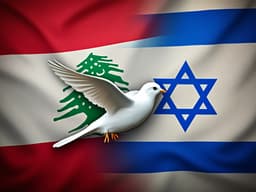
Israel and Hezbollah have maintained a ceasefire agreement since April 16, 2026, with two formal extensions already announced on April 23 and May 15. The market tests whether a third extension announcement will occur before June 30, 2026. The 100% implied probability reflects the pattern established by the first two extensions, both of which materialised within weeks of the initial agreement, suggesting institutional and political momentum toward continued de-escalation rather than renewed conflict.
Historical precedent matters here. Previous Israeli-Hezbollah ceasefires, including the 2006 UN-brokered arrangement following the summer war, typically required periodic reaffirmation as conditions shifted. The April 2026 agreement's two extensions within a month indicate both parties face incentives to avoid escalation—whether through US diplomatic pressure, domestic political constraints, or military fatigue. However, ceasefire extensions can fail if triggering incidents occur or if political calculations shift. The market's certainty may reflect confidence in near-term stability rather than certainty through June 30.
Traders should monitor Israeli and Lebanese government statements, particularly from Defence Ministry officials and Prime Minister's office announcements. Any significant cross-border incident, even minor, could alter the extension calculus. The US State Department's public statements on regional stability also carry weight, as American diplomatic involvement has been central to the agreement's survival. Across platforms, Polymarket's decimal odds format (currently around 100.0) and Kalshi's binary structure both reflect this consensus, though liquidity depth varies; Betfair and Smarkets typically show tighter spreads on geopolitical events with established trading histories.
Methodology
We read Israel announces Lebanon ceasefire extension by 2026? from four platform perspectives: Polymarket (on-chain CLOB), Kalshi (CFTC-regulated exchange), Betfair Exchange (sports book exchange), Smarkets (peer-to-peer betting exchange). Polymarket's live mid is the canonical probability; the side-by-side columns benchmark fees, KYC, settlement currency and deposit rails so you can choose the venue that fits your jurisdiction and trade size.
Resolution & payout
Settlement is the biggest difference between the four platforms: Polymarket on-chain in USDC (instant), Kalshi USD via CFTC (T+1), Betfair and Smarkets in local currency via bank withdrawal (T+1 to T+3). On-chain settlement clears in minutes — the fastest payout path of the four.
FAQ
- Polymarket vs Kalshi — which is better?
- Depends on your location. Kalshi is CFTC-regulated, US-only with full KYC. Polymarket is global, on-chain, no KYC up to $1,500. Polymarket has ~10x higher liquidity but higher regulatory risk.
- What does Polymarket cost vs Kalshi?
- Polymarket: 0% fees, only Polygon network costs (~$0.01/trade). Kalshi: up to 7% per trade plus spread. For high-frequency traders, Polymarket is dramatically cheaper.
- What about Smarkets as an alternative?
- Smarkets is a UK betting exchange with a lower default commission (2%) than Betfair. Liquidity on political markets is below Polymarket, comparable to Kalshi. Geo-blocked in many jurisdictions.
- Which platform is accessible globally?
- Polymarket is geo-blocked in the US/UK/EU. Kalshi is US-only. Betfair and Smarkets are UK-restricted. PolyGram has a different geo footprint and routes to Polymarket's order book at 0% fees.
- Are all these platforms regulated?
- No. Kalshi is CFTC-regulated (US). Betfair and Smarkets are UK Gambling Commission licensed. Polymarket operates without explicit regulation — a different risk profile than a regulated sportsbook.
Trade Israel announces Lebanon ceasefire extension by 2026? on PolyGram
Live order book, 0% fees, USDC settlement in seconds.
Open live market →